Exhibition Booth Production in Saudi Arabia: From Design to Installation
An exhibition booth is more than a temporary display space. It is where a brand introduces its products, meets potential customers, builds relationships, and creates memorable experiences.
For companies participating in trade shows across Saudi Arabia, successful exhibition booth production requires careful coordination between design, fabrication, branding, logistics, and on-site installation.
Whether you are preparing for an exhibition in Riyadh, Jeddah, or Dammam, understanding the production process can help you avoid unnecessary costs, last-minute delays, and technical problems.
In this guide, we explain how exhibition booths move from an initial concept to a fully installed exhibition stand.
What Is Exhibition Booth Production?
Exhibition booth production is the process of transforming an approved exhibition stand design into a physical, functional space.
It typically includes:
- Booth planning and technical drawings
- Structural fabrication and material preparation
- Branding and graphic production
- Lighting, electrical work, and audiovisual integration
- Transportation and exhibition venue coordination
- On-site assembly, testing, and final handover
- Dismantling and removal after the exhibition
Unlike booth design, which focuses primarily on the concept and visitor experience, booth production focuses on how that concept is manufactured, transported, and built safely within the exhibition venue.
1. Understanding the Exhibition Brief
Every successful booth starts with a clear brief.
Before beginning production, organizers and exhibitors should define the purpose of the exhibition stand. Is the priority product demonstration, lead generation, brand awareness, private meetings, or a combination of these goals?
The production team also needs practical information, including:
- Exhibition name and venue
- Booth dimensions and location
- Expected visitor flow
- Brand guidelines and display requirements
- Required screens, lighting, furniture, and meeting areas
- Budget and installation deadlines
A detailed brief helps align the creative concept with the available space, budget, and operational requirements.
2. Exhibition Booth Design and Space Planning
Once the requirements are established, the next stage is developing a design that works both visually and practically.
An effective booth layout should make it easy for visitors to recognize the brand, enter the space, understand the products or services, and interact with the exhibition team.
Depending on the project, the design may include reception counters, product displays, demonstration zones, digital screens, storage areas, and meeting spaces.
Designers must also consider sightlines, accessibility, structural feasibility, and the venue’s technical requirements.
A visually impressive concept is valuable only when it can be produced and installed within the project’s real-world constraints.
3. Technical Drawings and Production Planning
After the design is approved, the concept moves into technical development.
Production drawings translate the visual design into detailed specifications for the fabrication team. These may cover structural dimensions, materials, finishes, electrical layouts, lighting positions, and installation details.
At this stage, the production team should confirm:
- Material availability and fabrication methods
- Structural and electrical requirements
- Venue-specific rules and submission deadlines
- Access arrangements for deliveries and installation
- Production, transportation, and assembly schedules
Technical planning is particularly important for custom-built exhibition stands, where different components must fit together precisely on-site.
4. Booth Fabrication and Material Selection
Fabrication is the stage where the approved design becomes a physical structure.
Depending on the booth concept, production may involve timber, metal frameworks, modular systems, acrylic panels, printed graphics, flooring, and decorative finishes.
Material selection should balance appearance, durability, safety, cost, and ease of installation.
For example, modular systems can be suitable for repeat exhibitions, while custom fabrication offers greater flexibility for distinctive brand environments.
Quality control during fabrication helps identify finishing issues, incorrect dimensions, and assembly problems before materials reach the exhibition venue.
5. Branding, Graphics, and Digital Displays
Branding is one of the most visible elements of an exhibition booth.
Logos, wall graphics, signage, printed panels, and digital displays should create a consistent visual identity throughout the space.
For some exhibitors, LED screens and interactive displays are central to the visitor experience. These elements require additional planning for screen dimensions, mounting positions, electrical connections, content playback, and viewing distance.
The objective is not simply to add more technology. Every display should support a clear communication goal.
6. Transportation and Exhibition Logistics
Even a well-produced booth can face problems without effective logistics.
Transportation planning should account for the size and weight of booth components, packaging, unloading arrangements, venue access, and the permitted installation window.
Exhibition venues may have specific procedures for contractor registration, vehicle access, loading areas, electrical work, and installation activities.
These requirements should be checked with the organizer and venue well before delivery.
For exhibitors traveling from outside Saudi Arabia, coordination may also involve imported display materials, local suppliers, and additional lead time.
7. On-Site Exhibition Booth Installation
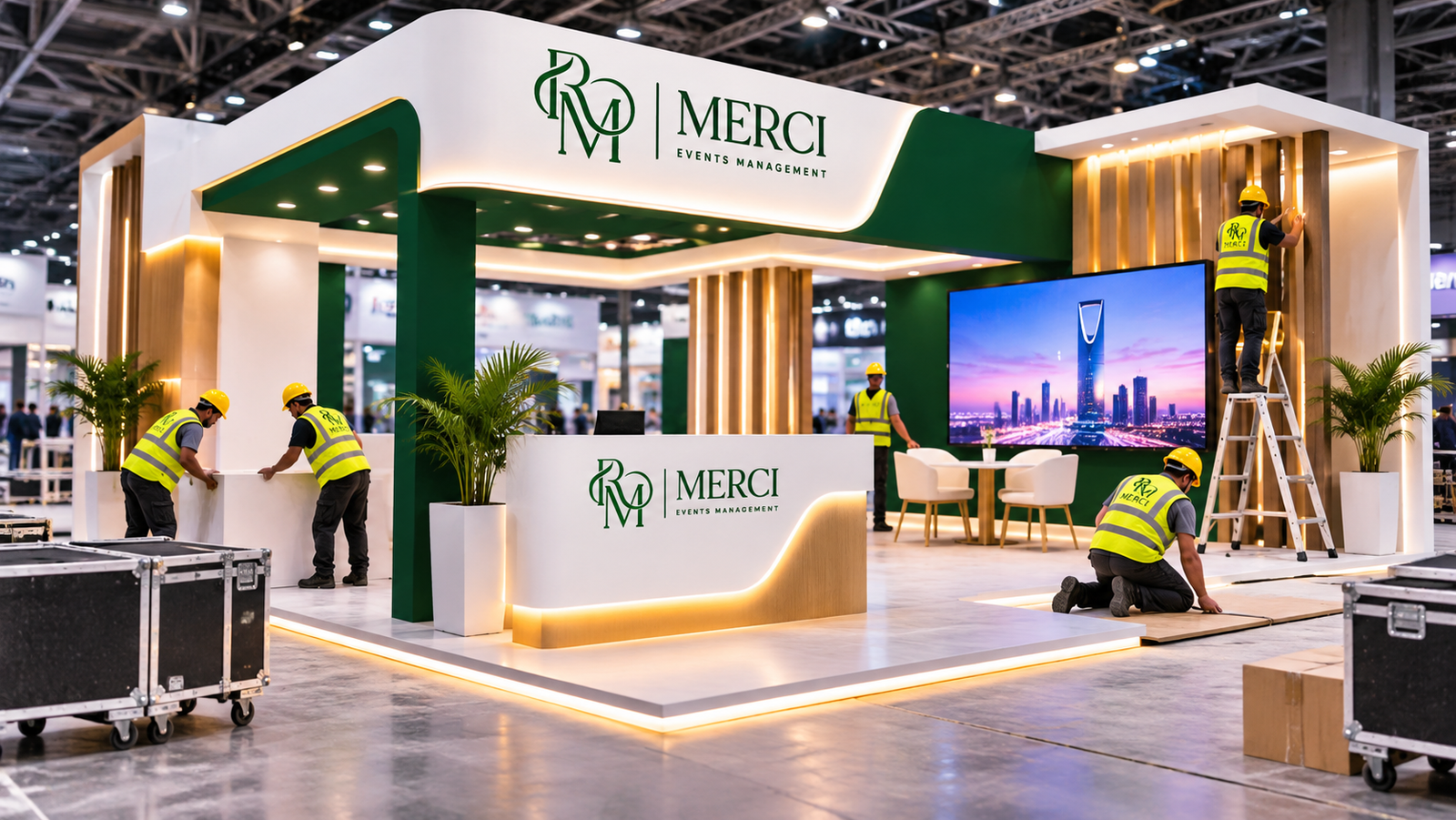
Installation is the stage where the production team assembles the booth inside the exhibition hall.
A typical installation sequence includes preparing the allocated space, assembling structural components, installing flooring and finishes, fitting graphics, connecting approved electrical systems, and positioning equipment and furniture.
The team should then inspect the completed booth for:
- Structural stability
- Electrical and lighting functionality
- Correct branding and graphics
- Clean finishes and presentation
- Screen and audiovisual performance
- Safe visitor access
Any issues should be resolved before the exhibitor’s final handover.
Because exhibition build-up periods can be limited, installation planning and coordination between contractors are essential.
8. Final Handover and Exhibition Support
Before the event opens, the exhibitor should have an opportunity to inspect the completed stand.
The handover should confirm that the booth matches the approved scope and that its key systems are working.
Depending on the project, on-site support may also be required during the exhibition for audiovisual equipment, lighting, repairs, or other technical needs.
Planning for operational support can reduce disruption during important visitor meetings and product demonstrations.
9. Dismantling and Post-Exhibition Planning
Booth production does not end when the exhibition closes.
Dismantling must follow the organizer’s schedule and venue rules. Materials and equipment should be removed safely, with reusable components packed and stored appropriately.
For companies participating in multiple exhibitions, it is worth considering whether structural elements, furniture, and display systems can be reused or adapted.
This approach may help reduce future production costs and material waste.
Common Exhibition Booth Production Mistakes
Several avoidable issues can affect exhibition stand quality and delivery:
Starting production too late: Delayed approvals can compress fabrication and installation schedules.
Ignoring venue requirements: A booth design may need revisions if technical or operational rules were not considered early.
Choosing materials based only on appearance: Materials must also be practical, durable, and appropriate for the intended structure.
Leaving audiovisual planning until the end: Screens, lighting, and electrical systems need to be integrated into the technical plan.
Failing to coordinate logistics: Delayed transportation or venue access can disrupt installation.
The most effective way to reduce these risks is to involve the production team early and maintain a clear approval process.
For additional planning advice, read our guide to Exhibition Booth Design in Saudi Arabia: 9 Mistakes to Avoid Before Your Next Trade Show.
How to Choose an Exhibition Booth Production Company in Saudi Arabia
When evaluating an exhibition booth production partner, look beyond the initial design presentation.
Ask whether the company can manage fabrication, logistics, installation, and on-site coordination. Review relevant project experience and clarify which services are handled directly and which involve subcontractors.
A useful proposal should explain the production scope, materials, delivery milestones, responsibilities, and any exclusions.
Clear communication and realistic scheduling are just as important as creative capability.
Exhibition Booth Production with Merci Event
At Merci Event, we support companies preparing for exhibitions and corporate events in Saudi Arabia through booth production and event execution services.
From early planning and design coordination to fabrication, branding, installation, and technical requirements, our focus is on helping exhibitors create professional spaces that support their business objectives.
Whether your upcoming exhibition is in Riyadh, Jeddah, or another Saudi city, our team can discuss the booth requirements, project scope, and practical next steps.
Planning an exhibition booth in Saudi Arabia? Contact Merci Event to discuss your booth production requirements and request a project consultation.
Frequently Asked Questions
What is the difference between exhibition booth design and booth production?
Booth design develops the concept, layout, and visual appearance. Booth production covers the technical preparation, fabrication, logistics, and physical installation required to deliver that design.
How long does exhibition booth production take in Saudi Arabia?
The timeline depends on booth size, design complexity, materials, approvals, and venue schedules. Custom-built stands generally require more planning than simple modular installations. Confirm a project-specific schedule before committing to an exhibition deadline.
Can exhibition booths include LED screens and interactive displays?
Yes. LED screens, digital signage, and interactive features can be integrated into exhibition stands when the design, electrical requirements, and venue rules allow.
Is a custom exhibition booth better than a modular stand?
Neither option is automatically better. Custom booths offer greater design flexibility, while modular stands can be practical for repeat use. The right choice depends on your budget, branding goals, and exhibition schedule.
Does booth production include dismantling after the exhibition?
Dismantling can be included, but it should be clearly specified in the supplier’s proposal. Confirm removal, transportation, storage, and any related responsibilities before the event.